The shift
Rock demanded more level, more bandwidth, and more control than venue speech systems could provide. A new profession formed around solving those problems show by show.
The Beatles’ stadium tours exposed the gap: bands played through announcement systems while crowd noise buried them. Even the dedicated vocal amplifiers that followed, such as Marshall’s PA 100 and Vox’s later SS100, could not cover an arena. Engineers began assembling dedicated rigs from cinema horns such as the Altec A7, JBL drivers, custom cabinets and industrial amplifiers.
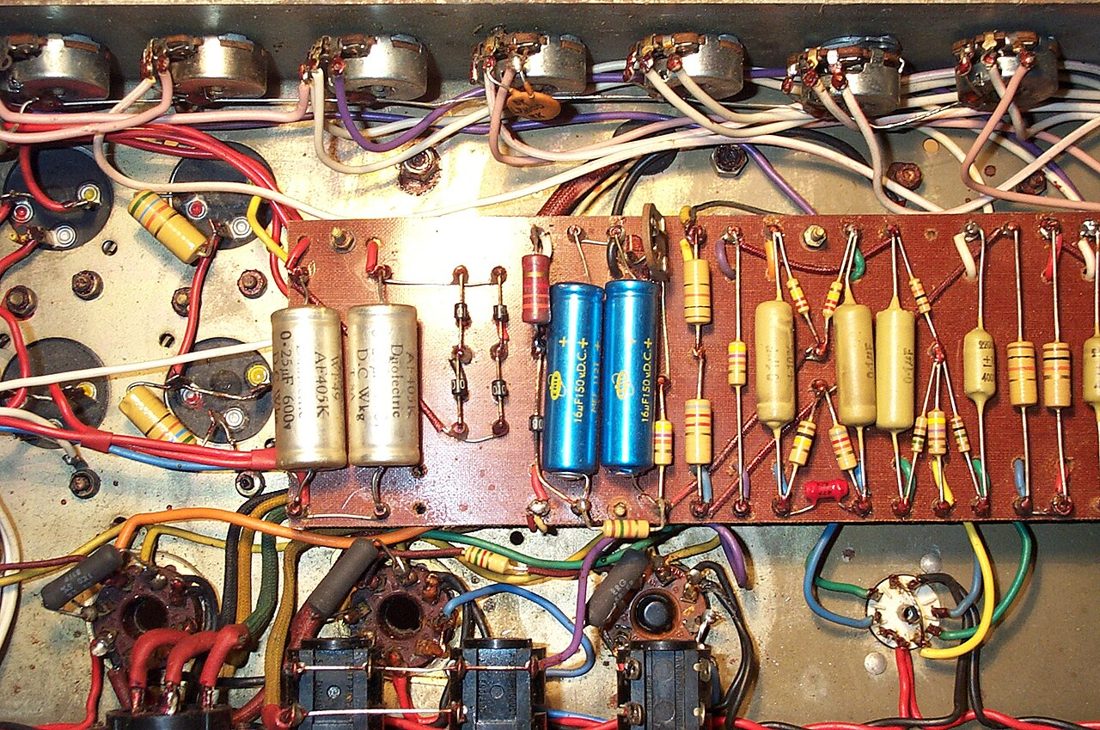
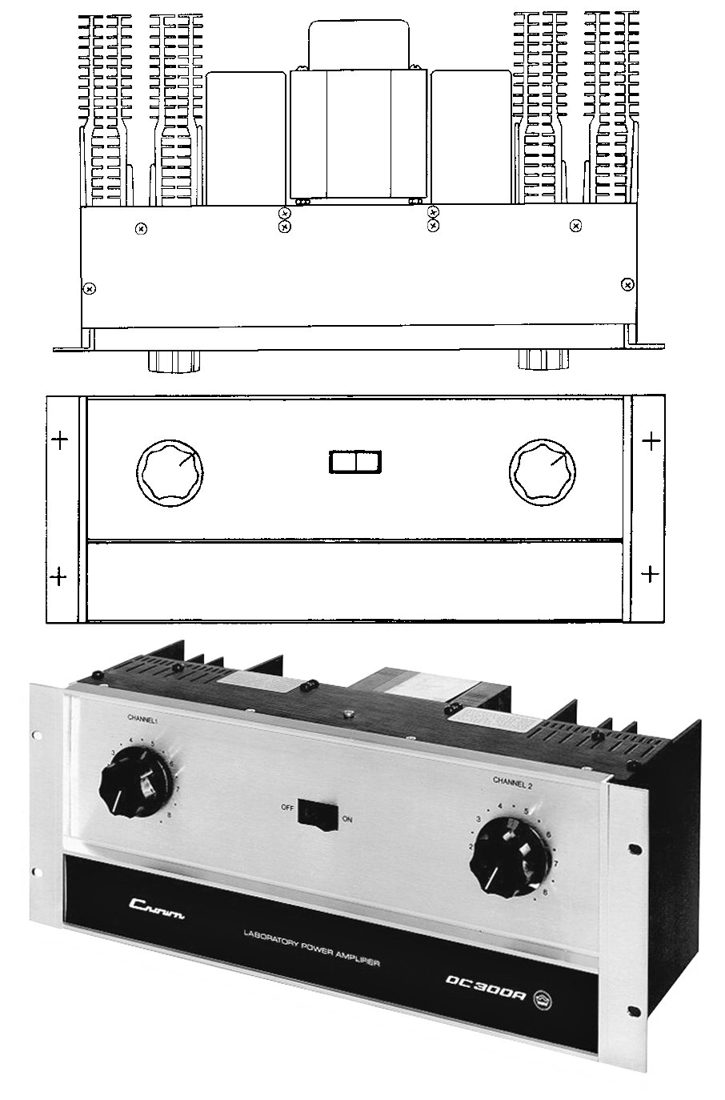
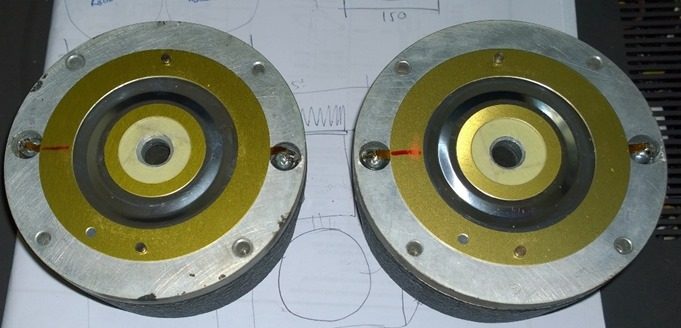
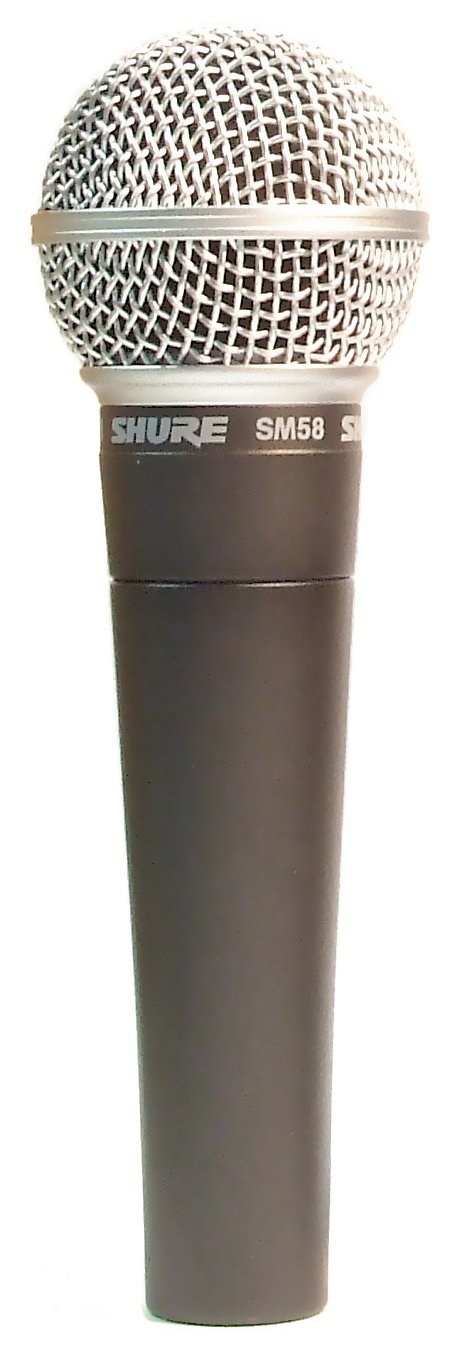
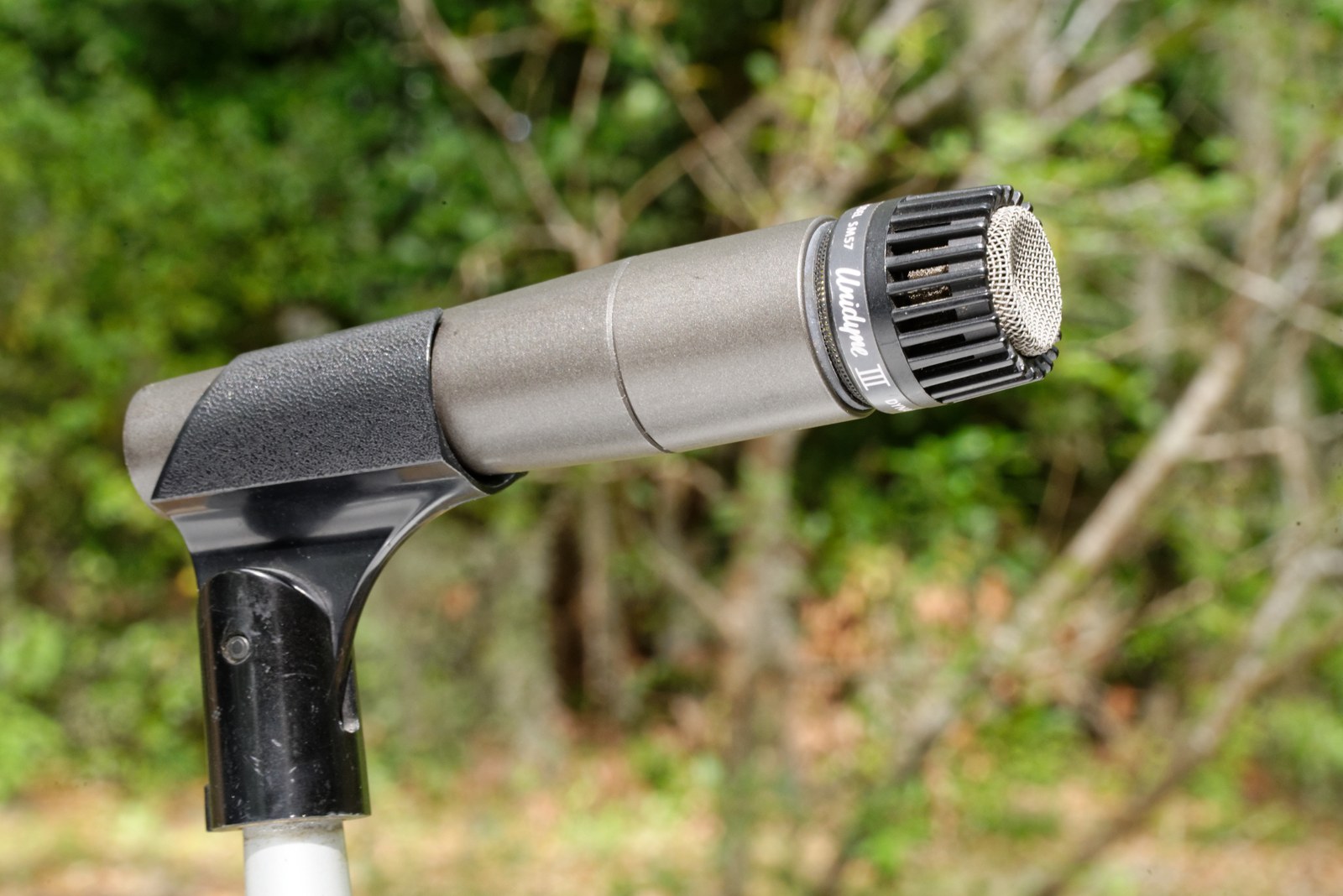
Amplifier power made those rigs possible. The Crown DC-300A, the McIntosh MC2300 and the Phase Linear 700 delivered hundreds of watts per channel. That made it practical to drive horn-loaded bass bins like the JBL 4550 and high-power cones such as the Gauss 4583, and to add the JBL 075 tweeter on top. At the microphone, the Shure SM58 and SM57 gave touring bands rugged cardioid capsules that resisted feedback from louder stages.
The mixing desk grew alongside the speakers. Early rigs ran through small portable units such as the tube Altec 1567A and the all-in-one Shure Vocal Master, each with only a handful of inputs. As bands added microphones for drums, keyboards and horns, sound companies commissioned bespoke desks: the Kelsey/Morris consoles in Britain, Allen & Heath’s quadraphonic MOD1 for Pink Floyd and Clair Brothers’ own folding console. By the mid-1970s purpose-built touring desks such as the Soundcraft Series 1 and the modular Midas PR-series packed more channels into road cases, and they fed the larger amplifier and loudspeaker systems of the next era.
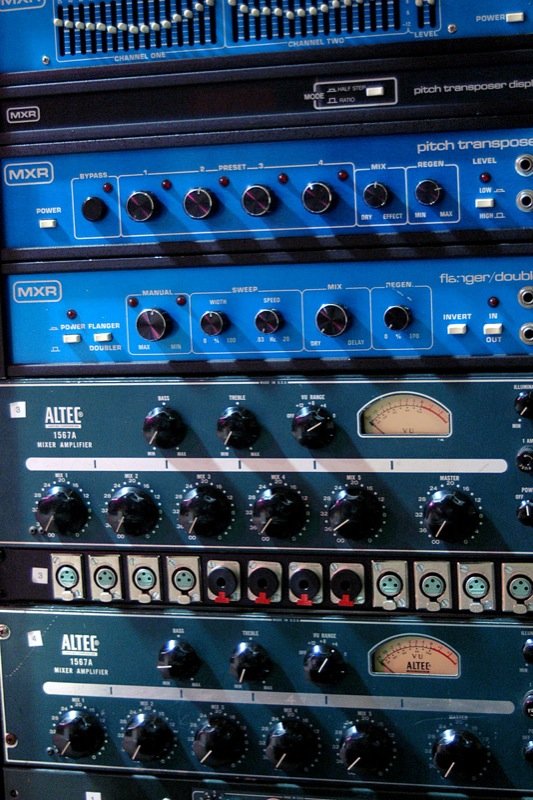 Altec Lansing Altec 1567A MixerJake Mohan · CC BY 2.0
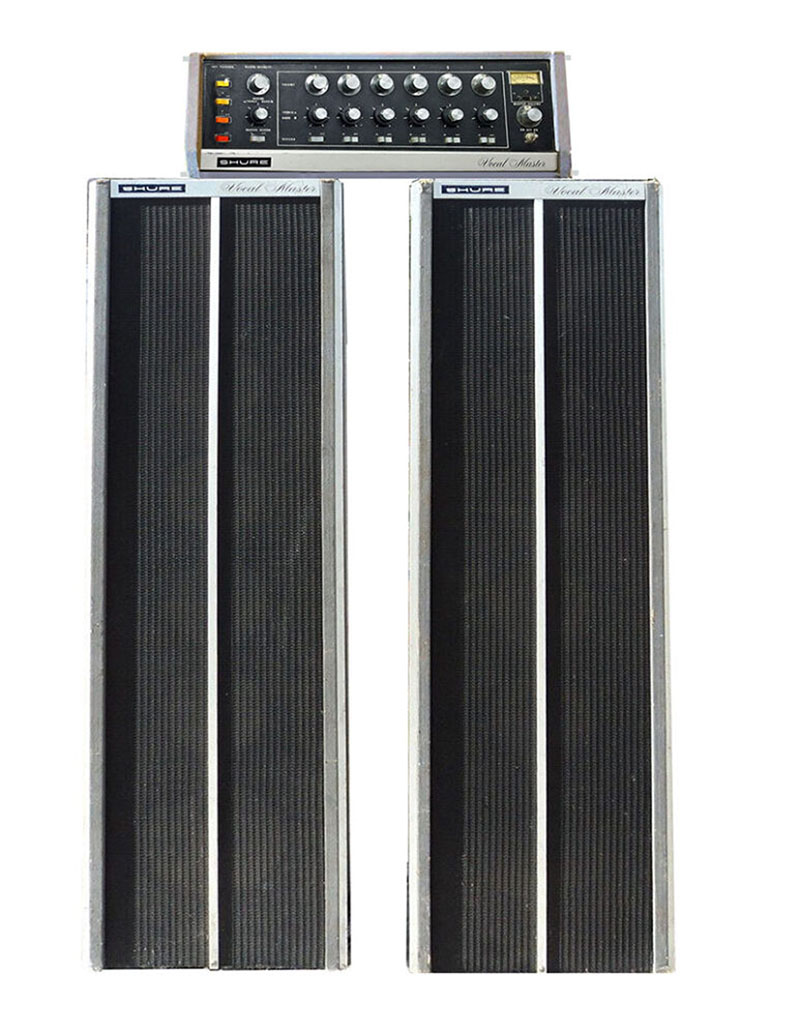 Shure Brothers Inc. Shure Vocal Master VA300/VA301© FOH magazine; photographer not credited · Rights retained by the rights holder; reproduced for historical commentary
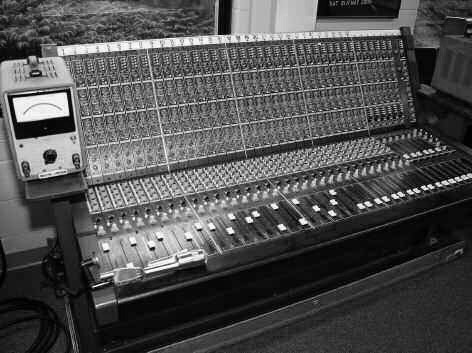 Clair Brothers Audio Clair Brothers Folding Console© Published by ProSoundWeb; photographer and original rights holder not credited · Copyright retained by the original rights holder; reproduced for identification and historical commentary (fair use). Reuse permission not established.
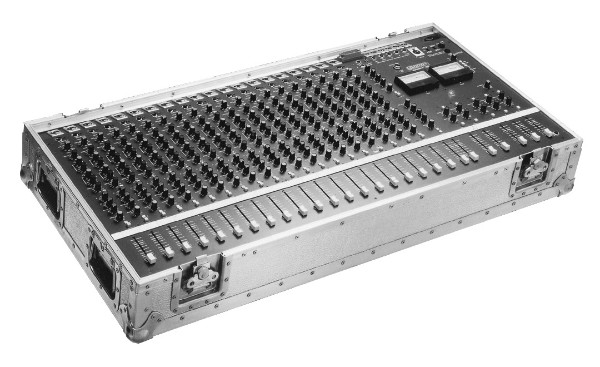 Soundcraft Soundcraft Series 1© Published by ProSoundWeb; photographer and original rights holder not credited · Copyright retained by the original rights holder; reproduced for identification and historical commentary (fair use). Reuse permission not established.
Bill Hanley ran the sound for Bob Dylan’s electric set at the 1965 Newport Folk Festival. At Monterey Pop in 1967, Abe Jacob designed the festival’s sound system, and McCune Sound’s chief engineer Bob Cavin designed its 16-channel console. On 12 May 1967, at Games for May in London’s Queen Elizabeth Hall, Pink Floyd moved sound around a four-channel loudspeaker layout with a joystick controller. The first unit was stolen after the show; the surviving Azimuth Co-ordinator, built around 1969 by Abbey Road engineer Bernard Speight with four rheostats modified to turn through 90 degrees, is in the V&A (S.294-1980) — context for Allen & Heath’s quadraphonic MOD1. Lexicon’s first product, the Delta T-101 of 1971, was a digital audio delay. Two years later three Eventide DDL 1745 units time-aligned the delay towers at Watkins Glen, turning the delay tower into a standard festival tool. At McCune, John Meyer and Bob Cavin built the JM-3, an active loudspeaker with its own electronics; it was used at the 1972 Four for McGovern concert.
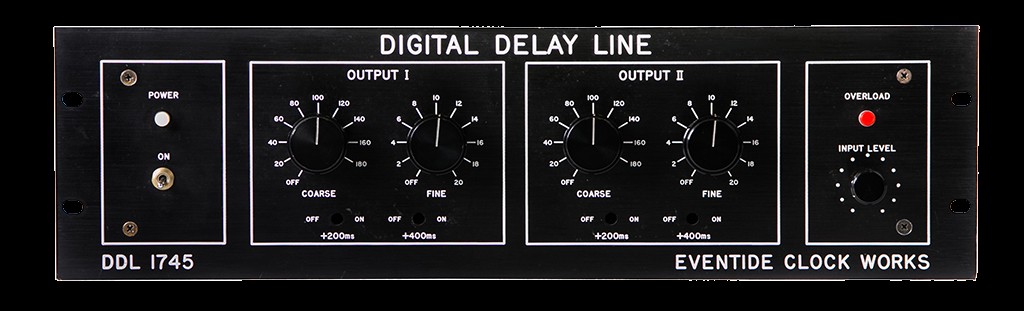 Eventide DDL 1745© Eventide Audio; photographer not credited · Copyright retained by the original rights holder; reproduced for identification and historical commentary (fair use). Reuse permission not established.
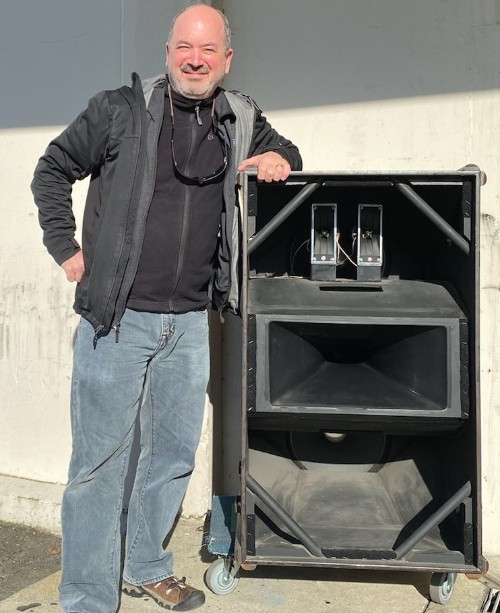 McCune Sound / John Meyer JM-3© Published by ProSoundWeb; photographer and original rights holder not credited · Copyright retained by the original rights holder; reproduced for identification and historical commentary (fair use). Reuse permission not established.
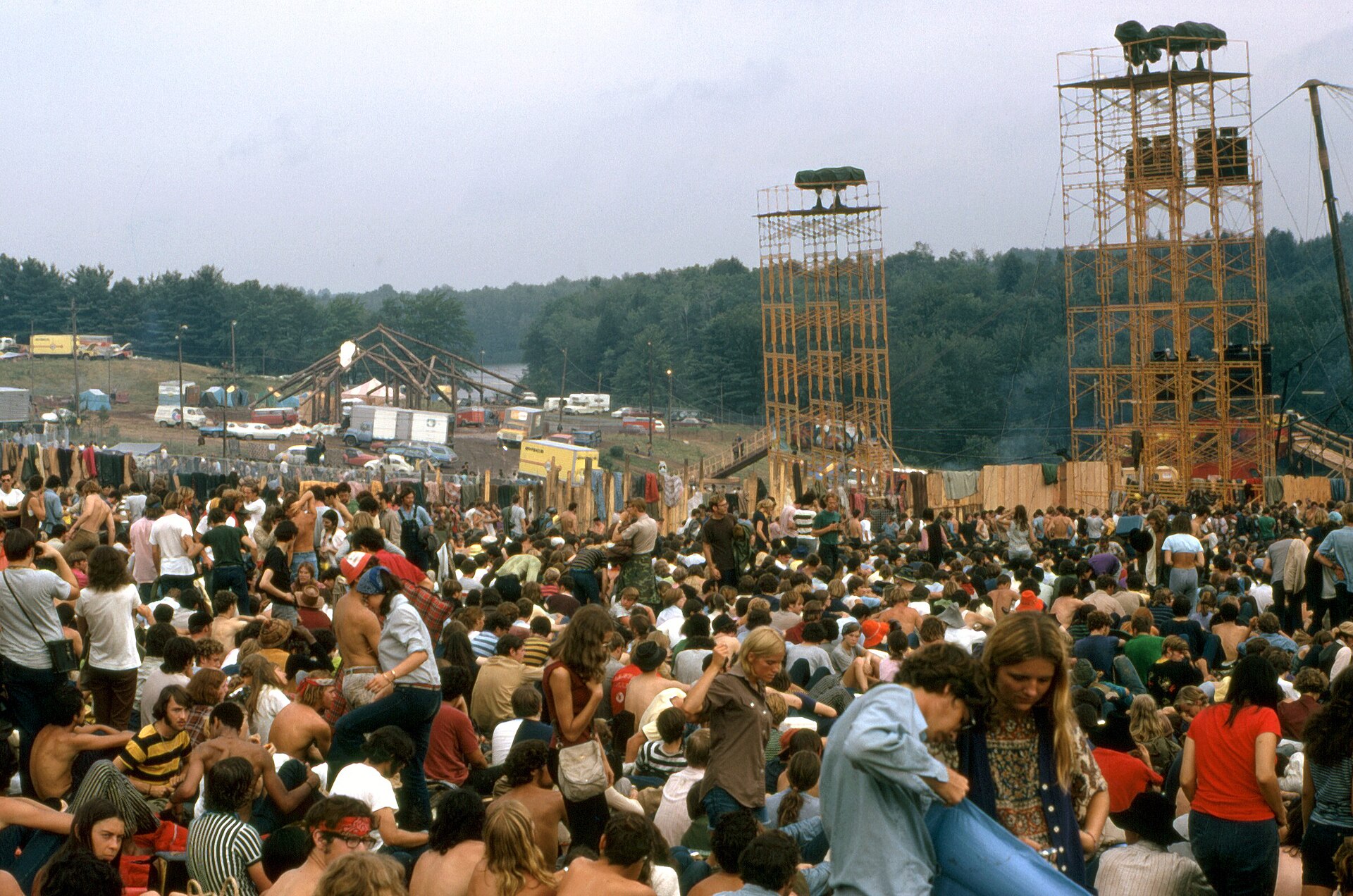
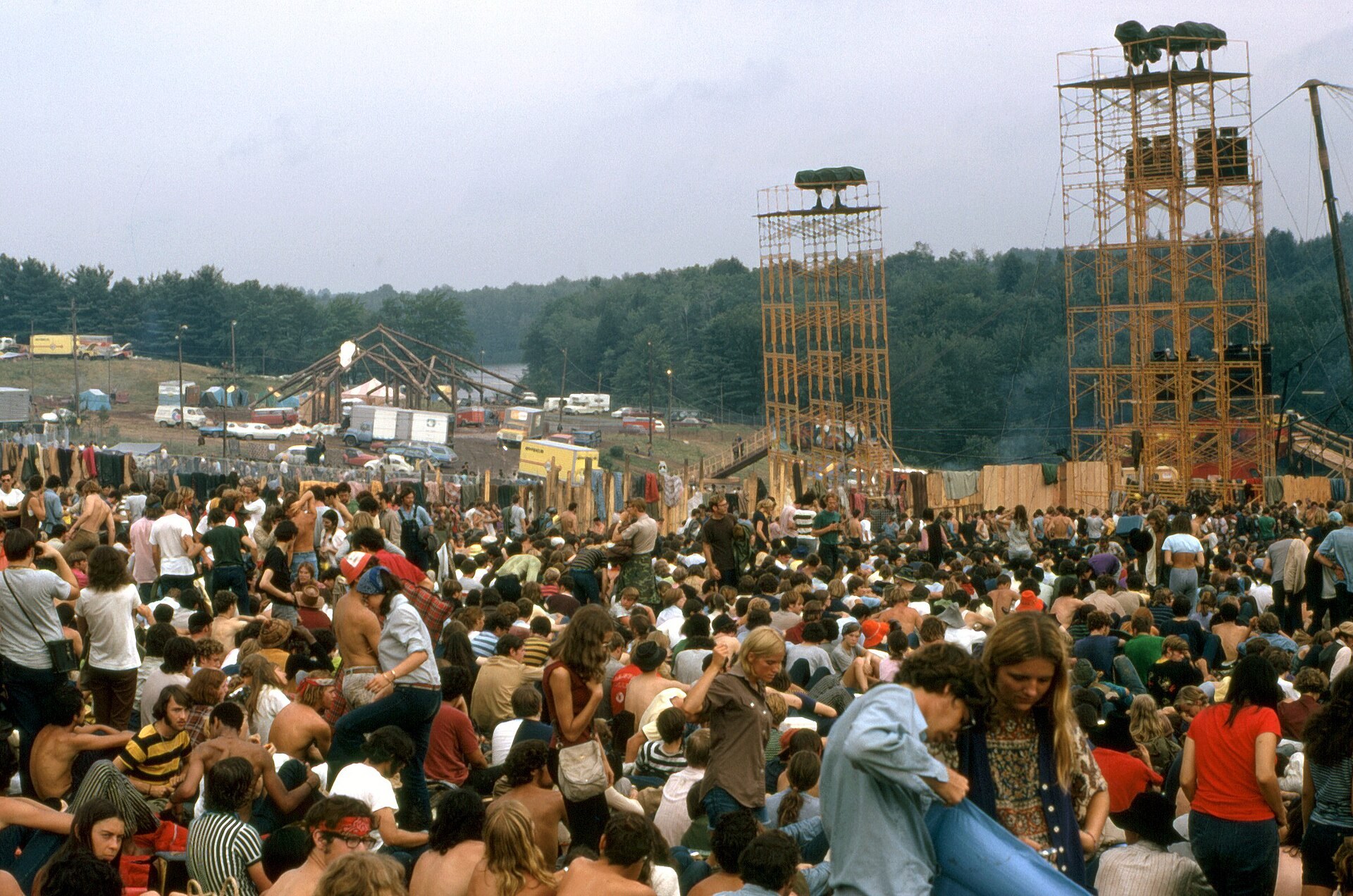
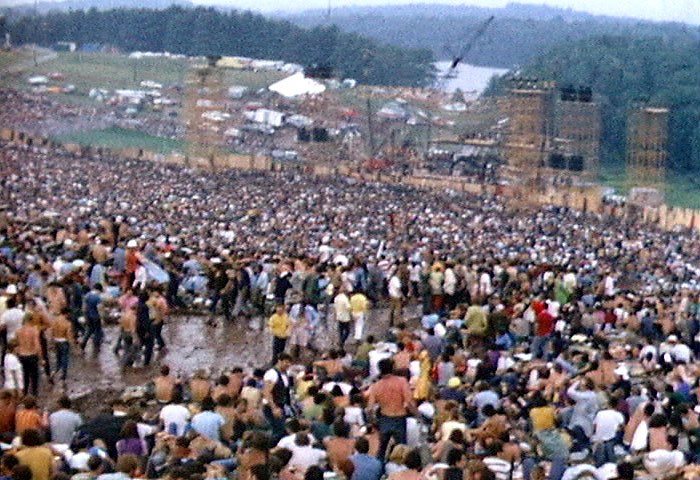
At Woodstock in August 1969, Bill Hanley’s festival system hung from two scaffold towers south of the stage. High clusters at about 70 feet covered the upper hillside, and lower clusters at about 20 feet covered the front of the crowd. Each cluster used Altec 1003B multicell horns with Altec 290 drivers over custom Hanley bins loaded with 15-inch JBL woofers. More than 20 McIntosh MC3500 amplifiers sat under the stage. There was no single console: four modified Shure M67 mixers, an Altec 1567A, two Shure Audio Master equalisers and four LA-2A limiters fed the system from a scaffold platform about 75 feet into the field. The rig survived days of rain, and it also carried the stage announcements to the crowd. The achievement was organisational as much as electrical. Clair Brothers, touring since 1966, introduced its integrated S4 cabinet in January 1974. Showco’s touring system and Community’s fibreglass Leviathan horn pursued the same goal. Live desks such as Soundcraft Series 1, Midas PR-series and Kelsey/Morris gave front-of-house engineers more channels to feed them.
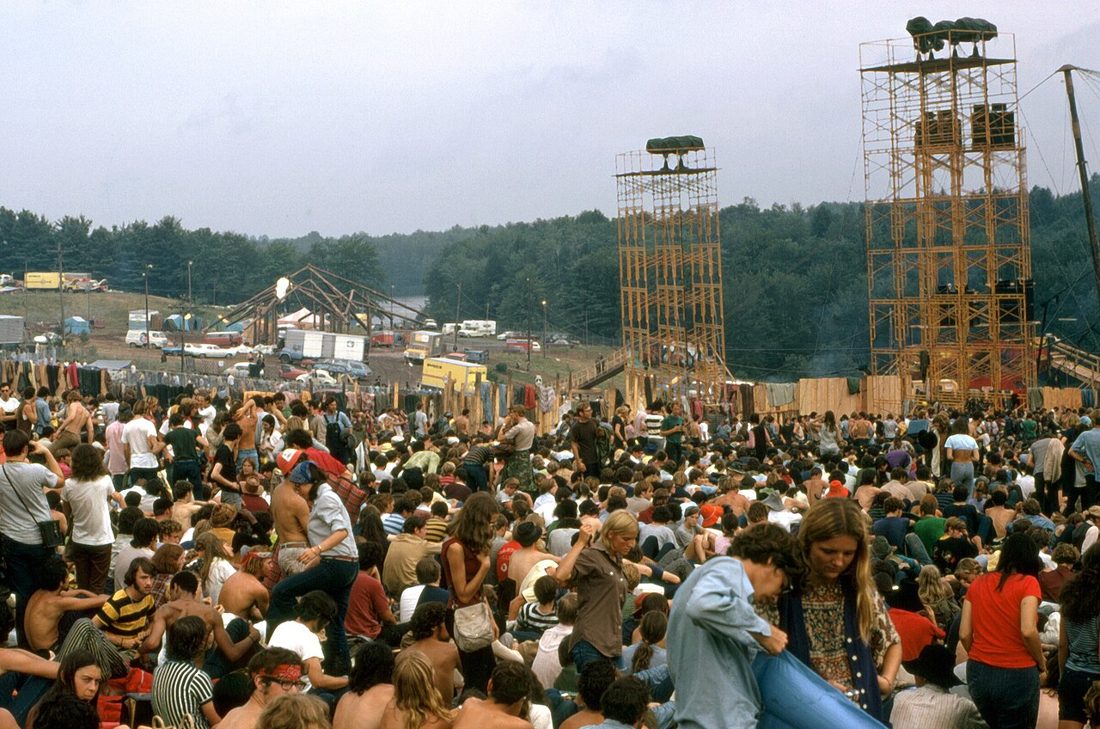 Hanley Sound Woodstock PAJames M Shelley · CC BY-SA 4.0Altec Lansing Altec 1567A MixerJake Mohan · CC BY 2.0
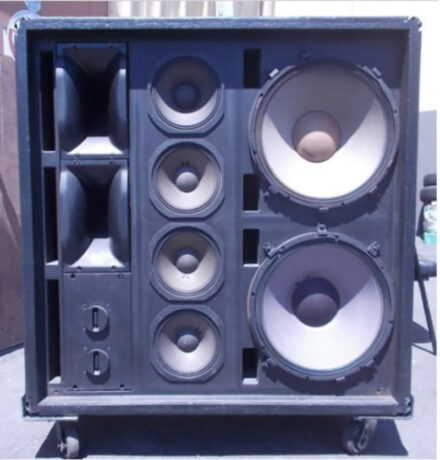 Clair Brothers S4© FOH magazine; photographer not credited · Rights retained by the rights holder; reproduced for historical commentary
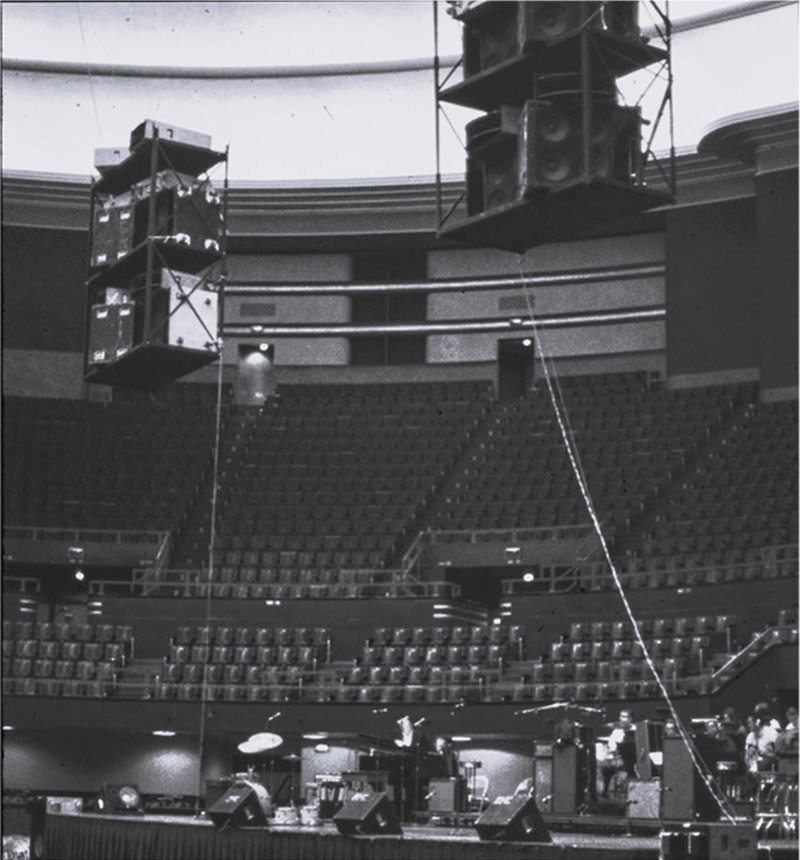 Showco Showco touring system© Courtesy Rusty Brutsche, via FOH magazine · Rights retained by the rights holder; reproduced for historical commentarySoundcraft Soundcraft Series 1© Published by ProSoundWeb; photographer and original rights holder not credited · Copyright retained by the original rights holder; reproduced for identification and historical commentary (fair use). Reuse permission not established.
Integrated boxes also came from frustration. In 1971 Harry McCune, Jr. was losing money re-coning blown Altec drivers, and asked John Meyer for a three-way loudspeaker in one cabinet, small enough for a jet cargo hold but ten times louder than an Altec 604. With chief engineer Bob Cavin and carpenter John Burke, Meyer produced the horn-loaded JM-3 in early 1972, driven by three Crown amplifiers through a per-band limiter and Cavin’s zero-phase crossover. Its first gig is disputed, but within months it was carrying Creedence Clearwater Revival’s final tour, and Abe Jacob used it to rescue the sound of Jesus Christ Superstar on Broadway.
FOH magazine’s year-by-year chronology shows how crowded the decade became. In 1970 Bob Heil built a large four-way system for the Grateful Dead, powered by home hi-fi amplifiers; Clair Brothers switched to more robust JBL drivers and, by 1971, was hanging a two-way, 360-degree cluster for Elvis Presley, while the newly founded Showco built him a two-way system of its own. JBL’s 2440 compression driver, with a 4-inch voice coil, outlasted rival drivers at rock levels. Electro-Voice put Thiele-Small parameters on woofer data sheets in 1972, and D.B. Keele developed constant-directivity horns there in 1973. In 1974 Gene Clair and Stan Shaak built the S4, a four-way, 405-lb all-in-one cabinet, and Keny Whitright designed Showco’s four-way M4; at Oakland Coliseum, Cal Perkins’s fully horn-loaded FM Productions system carried the CSNY reunion. Tasco’s system for The Who at the Valley in 1976 entered the Guinness Book of World Records as the loudest concert, at 126 dB 100 feet from the loudspeakers.
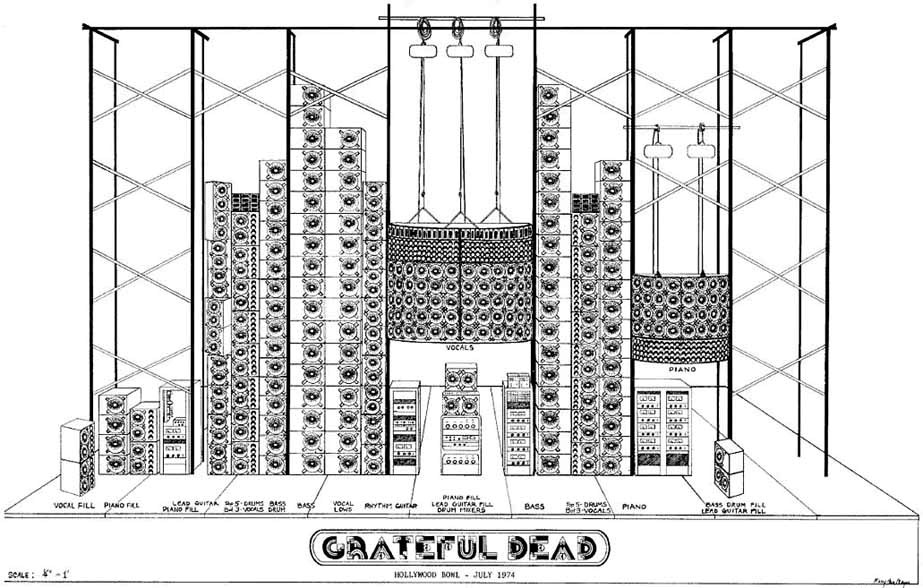
The Grateful Dead’s 1974 Wall of Sound carried the idea to its limit. Instrument-specific arrays stood behind the band, and differential microphones cancelled the PA’s own sound. Accounts often inflate its wattage. Its lasting lesson was that the system itself could be designed as one modular instrument, an idea modular touring would industrialise.
Moving the gear from show to show became its own discipline. Early rigs travelled in homemade trunks and borrowed boxes; ProSoundWeb’s road-case history credits Chuck Vallas’s Anvil Cases, founded in California in 1952, with the first dedicated transport cases for touring musicians — birch plywood, protected edges and heavy hardware. In late-1960s London, Peter Ross and Chris Sherwin saw an imported American case, built their own improved version, and CP Cases spread through the roadie grapevine to acts including The Who, the Moody Blues and Deep Purple. Case makers later borrowed the airline industry’s ATA 300 packaging specification, first published on August 1, 1960, as the construction benchmark behind the “ATA-rated” case: Category I construction calls for plywood walls, riveted aluminium edging, ball corners and bonded cushioning that survives repeated drops. That borrowing was informal — ATA 300 was written for airline cargo, not concert touring — but it gave buyers a shared way to judge a case’s toughness.
Interconnection hardware and wiring conventions settled unevenly. The latching connector the industry still uses descends from James H. Cannon’s Cannon Electric “X” series: a latch added around 1950 produced the XL, and synthetic-rubber insulation by 1955 gave the part its XLR name. Polarity did not standardise with the connector. The foreword to the AES14 connector standard records that Ampex wired its machines pin 3 hot from 1950, while rival Magnecord adopted the opposite pin 2 hot convention at about the same time — two American practices that would coexist for four decades. Most American equipment remained pin 3 hot into the late 1970s, so a balanced line could arrive polarity-inverted depending on whose gear it passed through; the full resolution belongs to a later era.
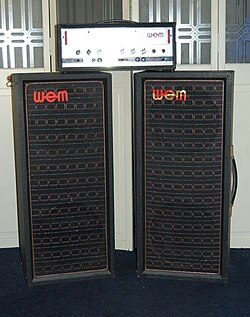
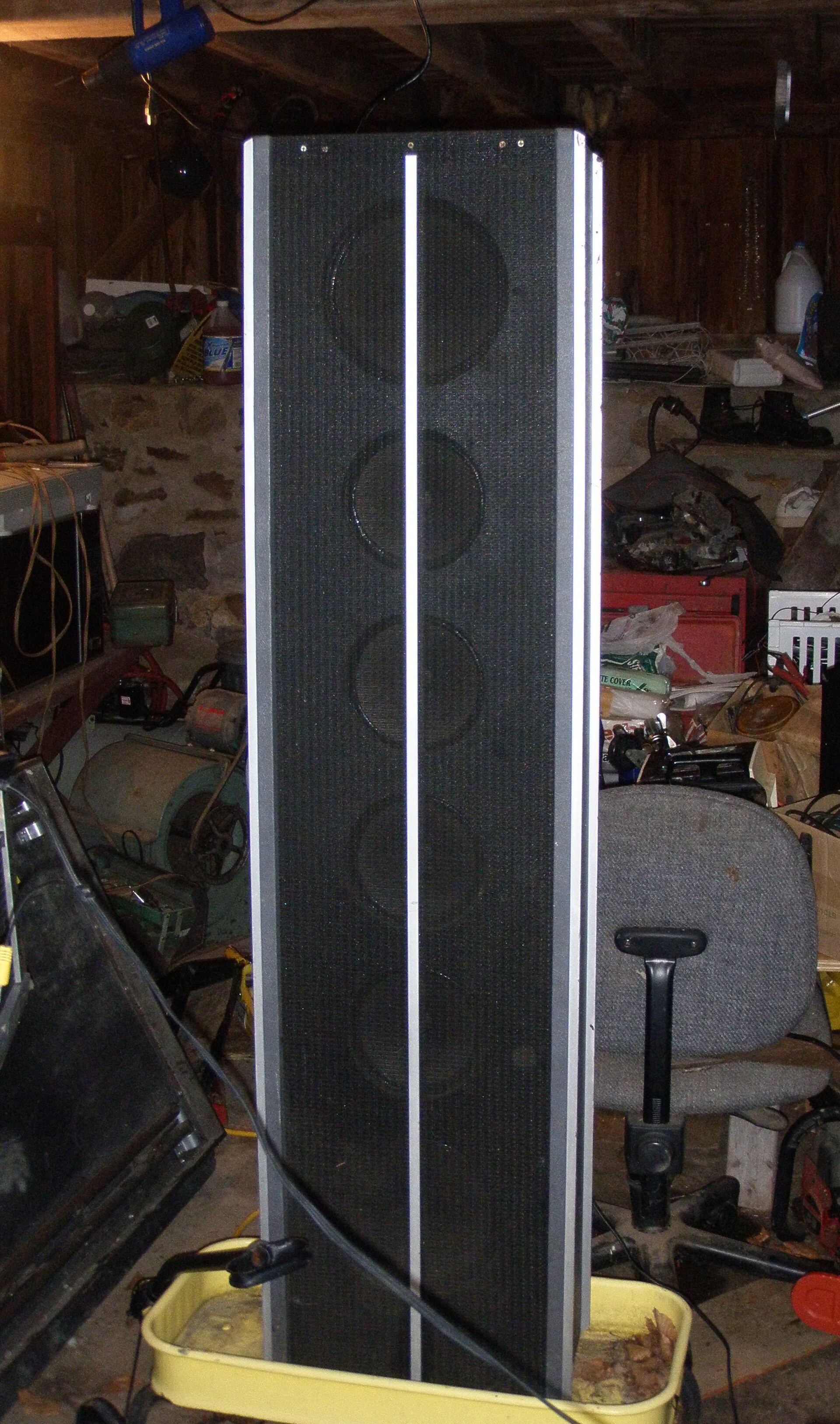
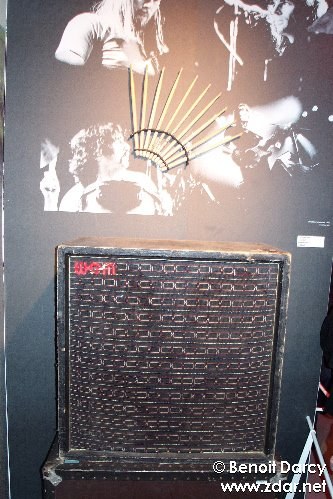
David K. Kennedy's FOH loudspeaker survey fills in the portable side of the decade. Shure's 1967 Vocal Master columns were, he argues, the first successful packaged portable P.A., used by Frank Sinatra and Elvis Presley for vocals and monitoring. In the late 1960s Sunn and Tycobrahe built portable three-way concert systems for clubs and touring acts, with Tycobrahe co-founder John Judnich credited by some with the first integrated active three-way concert loudspeakers, and Charlie Watkins' WEM festival stacks debuted at the 1967 National Jazz & Blues Festival before the 1969 and 1970 Isle of Wight festivals. By Kennedy's account, Clair Brothers' 1970 Slant Monitor was the first robust dual-driver floor wedge, establishing the touring monitor format.
Plates
Documents from the era
Chronology
Milestones
Shea Stadium
The Beatles perform through the stadium announcement system, a vivid demonstration of the need for dedicated concert reinforcement.
Touring companies emerge
Operators including Clair Brothers begin developing repeatable, road-ready systems rather than one-off venue installations.
Monterey Pop
A festival production brings more deliberate full-range reinforcement and multitrack recording to a major rock audience. Abe Jacob designed the festival’s sound system, and McCune Sound’s chief engineer Bob Cavin designed its 16-channel console.
The Azimuth Co-ordinator
At Games for May in London’s Queen Elizabeth Hall, Pink Floyd moves sound around a four-channel loudspeaker layout with a joystick controller.
Thread · Sound in spaceWoodstock
15–18 August: Bill Hanley’s custom system, with high and low clusters on two scaffold towers, McIntosh amplifiers and a bank of small Shure and Altec mixers, reinforces a huge outdoor gathering through days of rain.
Showco founded
Jack Maxson, Rusty Brutsche and Jack Calmes found Showco in Dallas; in 1971 it builds a two-way system for Elvis Presley.
Digital delay arrives
Lexicon’s Delta T-101 is a digital audio delay; in 1973 three Eventide DDL 1745 units time-align the delay towers at Watkins Glen.
Constant-directivity horns
D.B. Keele of Electro-Voice develops constant-directivity horn technology, and Don and Carolyn Davis found SynAudCon.
JM-3
At McCune, John Meyer and Bob Cavin build an active loudspeaker with its own electronics, used at the 1972 Four for McGovern concert.
The Wall of Sound
The Grateful Dead, Alembic, and collaborators deploy a monumental, instrument-segregated system behind the performers.
Cases and connectors standardise
Dedicated road cases (Anvil, then CP Cases) and the latching XLR connector appear; XLR polarity, however, stays divided between pin 2 hot and pin 3 hot practice.
Technical principle
Modularity and source separation
Repeating known loudspeaker modules lets a system scale for venue size. The Wall of Sound went further by assigning separate arrays to instruments and vocal channels, reducing electrical intermodulation while creating difficult acoustic and logistical trade-offs.
Simplified signal chain
Working vocabulary
Selected sources
- 01100 Loudspeaker Technologies that Changed Live-Sound History, Part 1 (David K. Kennedy, 6 September 2026) FOH
- 02Bill Hanley and Woodstock Smithsonian Magazine
- 03Woodstock: 50 Years After (John Kane, February 2019) FOH
- 04The History of the Sound at Woodstock Shure
- 05Woodstock Festival Grounds Historic Site Cultural Landscape Report Bethel Woods Center for the Arts
- 06The Grateful Dead’s Wall of Sound Audio Engineering Society
- 07Clair Global History Clair Global
- 08Getting Rock to Roll: a history of the development of road cases ProSoundWeb
- 09Our Story — CP Cases origins CP Cases
- 10What is ATA Spec 300? ProCases
- 11AES14-1992 (r2004) standard text, foreword on XLR polarity history Audio Engineering Society (archived scan)
- 12XLR connector history Electronics Notes
- 13Why do I get no sound when I connect my two vintage devices? (pin 2/pin 3 practice) Sound On Sound
- 14Abe Jacob Wikipedia
- 15Bob Cavin Wikipedia
- 16Bill Hanley (sound engineer) Wikipedia
- 17Lexicon (company) Wikipedia
- 18Summer Jam at Watkins Glen Wikipedia
- 19McCune Audio/Video/Lighting Wikipedia
- 20Azimuth Co-ordinator (collection record O76817) Victoria and Albert Museum
- 21The Sound of Woodstock PBS American Experience
- 22It Was Only 40 Years Ago Mix
- 23A Look Back at Woodstock WiFi HiFi
- 24Woodstock sound system discussion ProSoundWeb forums
- 25RE/P Files: An Interview With Bill Hanley (page 2) ProSoundWeb (reprint of Recording Engineer/Producer, January 1989)
- 26S-4 fiftieth-anniversary history Clair Global
- 27Clair Brothers and JBL JBL
- 28Vox PA100SS solid state 100 watt PA amplifier, 1968 to 1972 voxsupreme.org.uk
- 29Master P.A. 100 Radiomuseum.org
- 30Lust for Power Premier Guitar
- 31The Evolution of the 100W Circuit Amp Archives
- 32Summer Jam at Watkins Glen, Part Two PS Audio / Copper
Keep going